

What is an AI-Driven Payment Terminal? Preparing for the Future of POS to Benefit Acquirers and ISO/ISVs
By XAC Marketing Dept.
The payment industry has entered a new era. For decades, payment terminals have primarily served as secure devices for accepting card payments. While hardware capabilities have steadily improved - we transitioned from the mechanical friction of carbon-copy "knuckle-busters" to the digital convenience of electronic card from magnetic stripe readers to EMV chip, contactless payments, and Android SmartPOS - their fundamental role has remained largely transactional.
Today, Artificial Intelligence is reshaping that role.
In recent years, the industry standardized around the application-driven agility of Android smart POS terminals. Now, it has triggered the next major paradigm shift - the emergence of the AI-driven payment terminal. AI-driven payment terminals are transforming from simple payment acceptance devices into intelligent business platforms capable of analyzing data, assisting merchants, optimizing operations, and creating new revenue opportunities for payment providers.
For merchant acquirers, ISOs, and ISVs, this evolution represents far more than a simple hardware upgrade from a passive transactional endpoint, they provide a strategic platform to differentiate services, solid operational hub, and unlock new value-added and intelligent offerings.
AI-Driven Payment Terminals: The Next Evolution of Smart Commerce, So…. What Is It?
An AI-driven payment terminal is a payment device that integrates Artificial Intelligence capabilities either natively on the terminal (edge AI) or through cloud-based AI services connected via secure APIs. Unlike traditional payment terminals that simply process payment transactions, AI-enabled terminals can understand context, analyze merchant data, automate routine tasks, and provide intelligent recommendations in real time.

To understand an AI-driven payment terminal, it is helpful to contrast it with standard legacy systems and even first-generation Android smart POS terminals.
- Legacy Terminals (Reactive): Processed structured ISO 8583 card data through rigid, fixed firmware. They were completely blind to the operational context of the transaction.
- Smart POS Terminals (Interactive): Decoupled software from hardware using Android OS. This allowed standard business apps (like inventory lookup or basic loyalty tracking) to run alongside the payment kernel. However, they still relied on manual data entry and human execution.
- AI-Driven Terminals (Proactive/Autonomous): These devices integrate specialized hardware—such as Neural Processing Units (NPUs) inside the edge processor—alongside localized machine learning models.
An AI-driven payment terminal does not just wait for an application command, it actively interprets the environment at the point of sale. By utilizing computer vision via terminal cameras, voice-enabled operations and advanced natural language processing (NLP) via built-in microphones, and real-time deep learning anomaly models directly on the device, it proactively optimizes the transaction experience. Instead of merely executing code, the device learns, predicts, and adapts to merchant and consumer behaviors in real-time.
Why AI-Driven Payment Terminals Matter and Strategic Advantages for Acquirers, ISOs, and ISVs
Facing rapid margin compression and the commoditization of pure payment processing, acquirers, ISOs, and ISVs urgently need to break through traditional merchant service bottlenecks, and adopting AI-driven payment terminals offers core operational and financial advantages. Regarding transaction routing and revenue generation, AI terminals analyze transaction and basket data in real time to dynamically predict the most cost-effective and highest-probability authorization paths, thereby boosting approval rates and reducing merchant acceptance costs. Furthermore, functioning as edge-computing nodes deeply integrated with vertical SaaS solutions, these terminals can autonomously offer personalized upsells, compute dynamic pricing, or drive loyalty enrollments directly on the device, enabling ISVs to generate new recurring SaaS revenue streams beyond standard payment processing splits.
In terms of fleet management and maintenance, AI-driven terminals fundamentally transform the traditional reactive support model where issues are addressed only after hardware breaks down. These terminals continuously monitor their own system health and telemetry metrics, using predictive anomaly detection to issue proactive alerts before hardware failures occur—such as identifying battery degradation, card reader wear, or OS instability. This empowers ISOs and acquirers to conduct over-the-air (OTA) remediation or scheduled maintenance, significantly reducing merchant churn caused by operational downtime while lowering the total cost of ownership (TCO) to secure a lasting strategic edge.
How The Generation Shift:AI Payment Terminals from Traditional Payment POS Infrastructures
Traditional payment terminals were designed around a single objective: securely authorize and process payment transactions. Although today’s Android SmartPOS payment devices support multiple business applications, their intelligence still depends heavily on manually configured software and predefined workflows. AI fundamentally changes this operating model.
| Traditional Payment Terminal | AI-Driven Payment Terminal |
| Executes predefined payment functions | Learns from business and transaction data |
| Static software experience | Dynamic, adaptive user experience |
| Merchant must search for reports | AI proactively provides insights |
| Manual troubleshooting | AI-assisted diagnostics |
| Limited business intelligence | Predictive analytics and recommendations |
| Reactive operations | Proactive operational support |
| Separate business applications | AI integrates information across multiple services |
Instead of acting as another application installed on the terminal, AI becomes an intelligent operating layer that helps merchants make better business decisions. This evolution transforms payment terminals into strategic business platforms rather than transactional endpoints.
The Long-Term Impact on Future Payment Trends
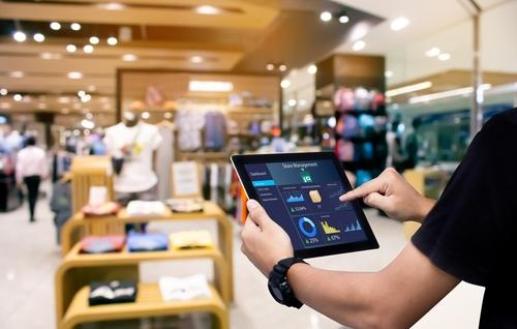
Simultaneously, hyper-personalized merchant experiences enable terminals to continuously learn from user behavior over time, tailoring dashboard layouts, frequently used functions, business alerts, and recommended operational reports to fit specific business needs. Rather than operating independently, terminals are becoming central nodes within intelligent payment ecosystems. They seamlessly connect with ERP platforms, accounting software, inventory systems, CRM applications, loyalty programs, e-commerce platforms, and AI cloud services, serving as an intelligent gateway that links all core business software together.
Seizing the Intelligent Edge and Looking Ahead
The point of sale is undergoing a fundamental transformation, evolving from a traditional transaction-processing device into the "point of intelligence" at the edge of unified commerce. AI-driven payment terminals extend far beyond secure payment acceptance by offering real-time business insights, automating daily operations, and delivering hyper-personalized merchant experiences. For forward-thinking acquirers, ISOs, and ISVs, investing in high-performance, application-ready edge platforms represents a critical opportunity to escape margin compression, eliminate hardware maintenance silos, and move up the value chain. By reducing support costs, accelerating innovation, and expanding value-added services, payment providers can cultivate stronger merchant relationships and achieve higher customer retention. Ultimately, the future of the POS is smart, autonomous, and driven by AI, and organizations that embrace these platforms today will be best positioned to meet rising merchant expectations and lead the next generation of digital commerce.


